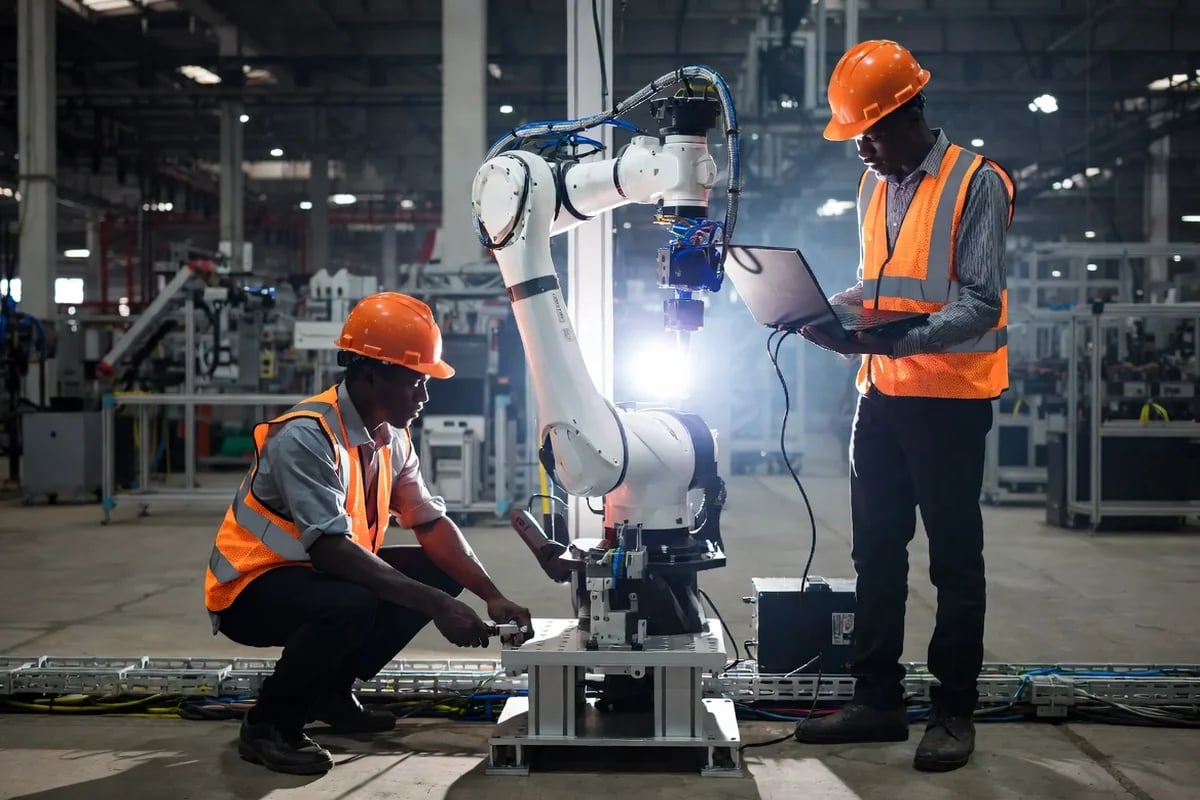
Robotic Installation & Integration
Professional installation and integration of robotic systems into factory floors, with commissioning, testing and handover discipline to ensure systems operate reliably within the production environment from day one.
Installing robotics onto a production line is an integration discipline — and to be clear before anything else: RoboFactory Africa installs and integrates industrial robotic cells (multi-axis arms, cobots, palletising, pick-and-place) tied into your PLCs, SCADA and safety interlocks — not consumer robotics, robotics education, or RPA software. We deploy and commission robotic systems for manufacturers and process plants across Ghana and Togo, since 2018. Request a consultation — or scope an automation project: +233 20 531 3333 (Togo / Francophone: +228 96 86 86 75).
What is Robotic Installation & Integration?
Robotic installation and integration is the discipline of physically deploying robotic systems onto live or staged factory floors and connecting those systems — mechanically, electrically, and programmatically — into a coherent, production-ready whole. It is not simply a matter of positioning equipment; it demands precise mechanical alignment, control-system interfacing, network commissioning, safety-zone validation, and a structured handover protocol that confirms the system operates reliably within the actual production environment before operators assume full control.
Manufacturing directors, plant engineers, and operations leads across Ghana and Togo specify this service when robotic capital equipment must transition from procurement into productive output without disruption to surrounding lines. The discipline is equally relevant to greenfield production halls and to existing facilities undertaking phased automation — where live production cannot be interrupted and every integration milestone must be sequenced with surgical care.
When to Specify Robotic Installation & Integration
The service is most frequently specified by food and beverage processors, pharmaceutical manufacturers, packaging operations, and light-industrial assembly plants that have committed to automation investment and require a specialist team to carry that investment through to reliable, production-verified operation. It is the critical bridge between equipment delivery and measurable output.
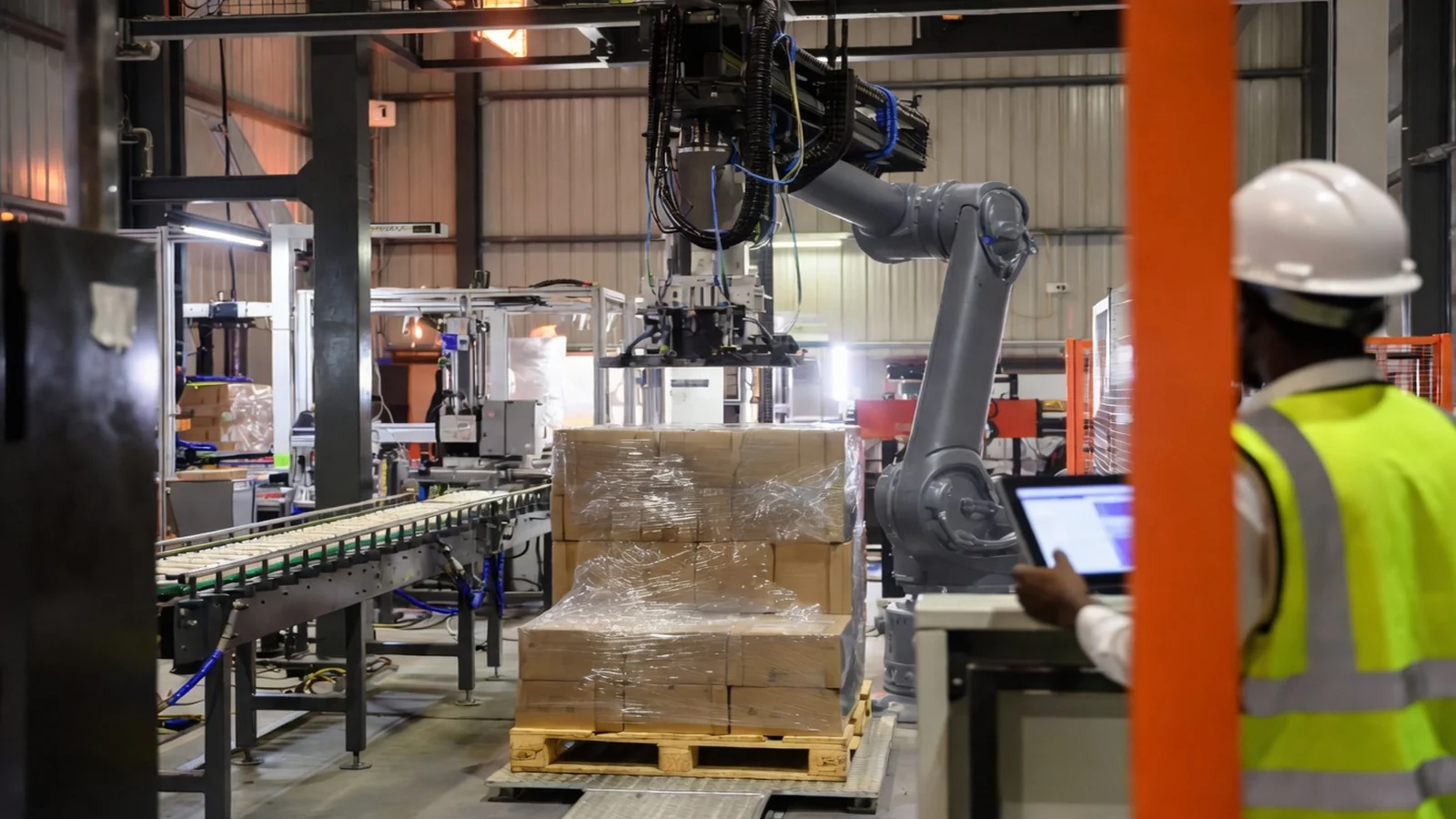
Projects that benefit most are those involving multi-axis robotic arms entering existing lines, collaborative robot deployments in mixed human–machine environments, automated palletising and de-palletising systems, and vision-guided pick-and-place installations. Wherever a robotic system must interface with conveyors, PLCs, SCADA platforms, or safety interlocks already present on the floor, structured integration discipline is non-negotiable.
Methodology — The RoboFactory Africa Specialist Approach
-
Pre-Integration Site Assessment — Specialists conduct a detailed survey of the production floor: power infrastructure, network topology, existing control architecture, spatial constraints, and safety perimeters. All findings are documented before a single system is moved into position.
-
Integration Engineering & Sequencing Plan — A phased installation sequence is designed to minimise production disruption. Mechanical mounting positions, cable routing, control-panel placement, and safety-zone boundaries are defined and approved by the client’s engineering team before work commences.
-
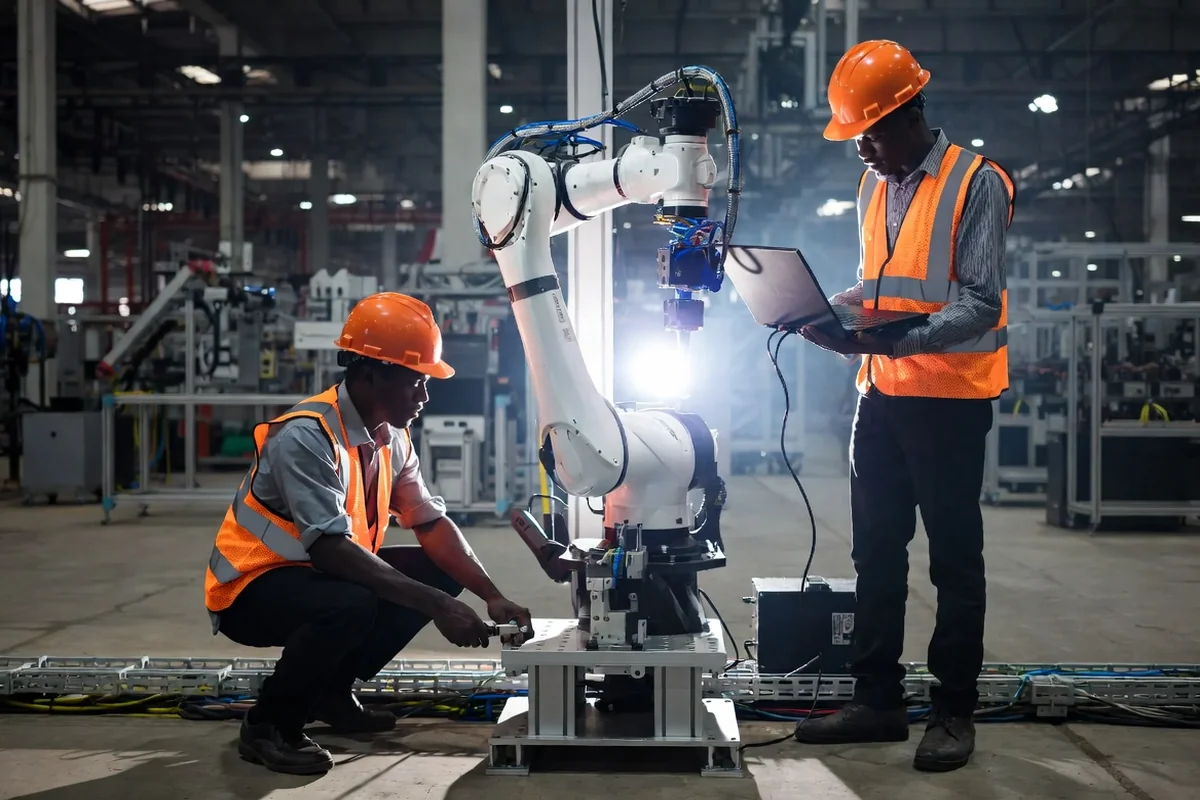
Mechanical & Electrical Installation — Robotic systems are mounted, anchored, and aligned to specification. All electrical connections, earthing arrangements, and communication interfaces — fieldbus, Ethernet/IP, or proprietary protocols — are terminated, labelled, and verified against the integration drawings.
-
System Commissioning & Performance Validation — Control software is loaded, motion paths are calibrated, and the integrated system is run through structured commissioning cycles. Throughput, cycle times, and fault-response behaviours are tested against the agreed performance parameters and recorded in the commissioning log.
-
Handover, Training & Operational Sign-Off — Formal handover is conducted only when the system demonstrates consistent, stable performance. Operators and maintenance personnel receive structured on-site training, and a documented handover pack — including as-built drawings, maintenance schedules, and emergency-stop protocols — is delivered to the client.
Technical Framing & Integration Standards
- Industrial-grade mechanical fastening and vibration isolation appropriate to the production environment
- Control-system interfacing across PLC platforms including Siemens, Allen-Bradley, and Mitsubishi architectures
- Safety-circuit integration aligned with machine-safety principles for collaborative and industrial robotic cells
- Structured cable management and labelling convention for long-term maintainability
- Commissioning documentation covering motion-path records, I/O verification, and operator sign-off sheets
- Compatibility assessment for integration with existing SCADA and MES platforms where present
Outcomes & Operational Confidence
A professionally integrated robotic system does not merely operate — it operates predictably, safely, and within the verified parameters the production schedule depends upon. Clients receive a fully commissioned, documented system with trained in-house operators and a clear maintenance baseline from day one. Ongoing support engagements are structured to sustain that baseline across the operational life of the installation.
Engineered to Standard
- We engineer to recognised practice — IEC 61131-3 (PLC programming), ISO 10218-2 / ISO 12100 (robot-cell & machinery safety risk assessment), IEC 61508 / IEC 61511 (functional safety / SIL where required), IEC 61439 (control panels), ISA-95 (MES integration), IEC 62443 (OT cybersecurity) — and within Ghana’s Factories, Offices and Shops Act 1970 (Act 328) / DFI safety regime
- We describe these as the framework we work to, and claim a specific certification or OEM-partner badge only where it is actually held
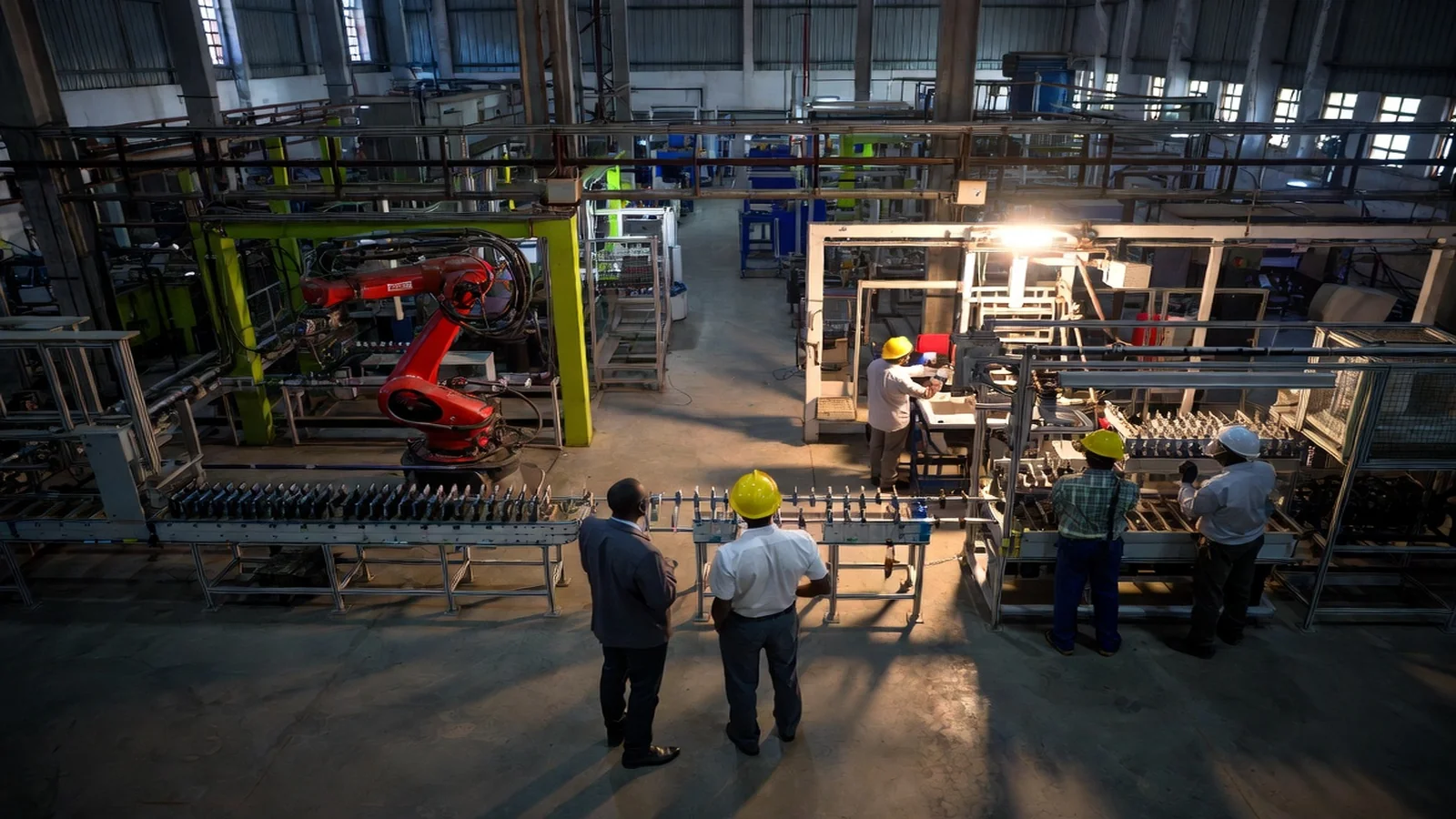
- Established 2018 — a real factory-automation integrator commissioning robotic cells on production lines across Ghana (Accra, Tema, the industrial zones) and Togo (Lomé), not a consumer-robotics or software-RPA vendor
Related Services
- Automation Consultation & Assessment — upstream diagnostic before integration
- Automation System Design & Engineering — the architecture phase
- Controls & Instrumentation — panels, PLC/SCADA, sensors
- Maintenance & Support — post-commissioning support and preventive maintenance
- Industrial Automation & Systems Integration — design through to a commissioned line