Process Automation
Integration of automated processes into manufacturing and industrial operations, replacing manual workflows with reliable, repeatable automated sequences designed for each client's specific production requirements.
Automating a production process is an engineering and integration problem — and to be clear before anything else: RoboFactory Africa delivers physical, industrial process automation (PLC/SCADA, sensors, actuators, automated sequences on a real line) — not RPA software bots, not consumer robotics, and not robotics education. We engineer, integrate and commission process-automation systems for manufacturers and process plants across Ghana and Togo, since 2018. Request a consultation — or scope an automation project: +233 20 531 3333 (Togo / Francophone: +228 96 86 86 75).
What is Process Automation?
Process automation is the systematic integration of automated sequences into manufacturing and industrial operations — replacing manual, labour-intensive workflows with reliable, repeatable systems calibrated precisely to each client’s production environment. It spans the full operational layer: material handling, mixing, filling, sealing, sorting, quality inspection, and throughput control. Each automated sequence is engineered to the specific rhythm, tolerances, and output targets of the facility, not adapted from a generic template.
Facilities directors, plant managers, and operations engineers across Ghana and Togo specify process automation when production demands have outgrown what manual workflows can sustain. Whether the objective is consistent output quality, reduced cycle time, or the elimination of bottlenecks that constrain throughput, process automation delivers a permanent, structural solution rather than a short-term operational patch.
When to Specify Process Automation
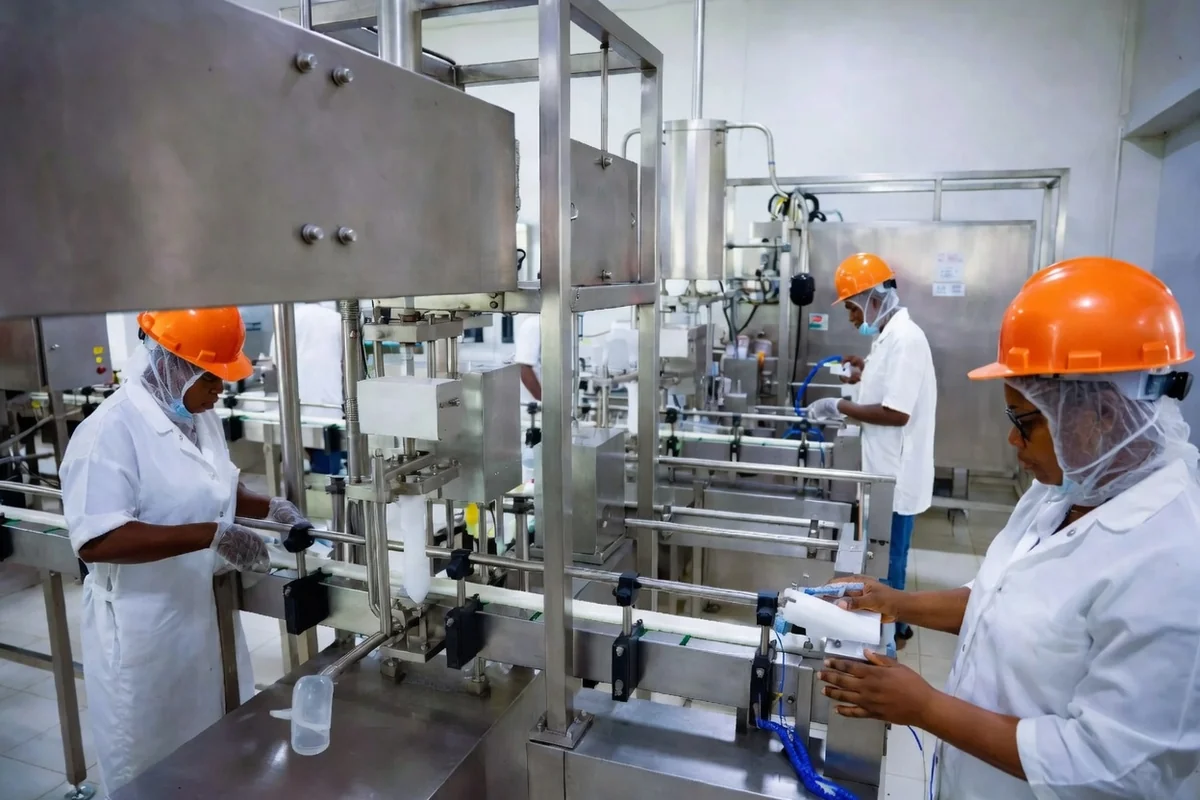
Process automation is specified across a broad range of industrial and manufacturing contexts. Food and beverage processing facilities benefit from automated portion control, filling lines, and hygiene-critical packaging sequences. Pharmaceutical and cosmetics manufacturers specify automation to achieve the batch consistency that regulatory environments demand. Plastics, packaging, and light manufacturing operations deploy automated conveyance and assembly sequences to sustain high-volume throughput without proportional increases in labour overhead.
Project types range from the automation of a single production stage — a filling station, a labelling line, a quality-check checkpoint — to the full-facility integration of interconnected automated processes operating as a single coordinated system. Both scales are within scope. Across Accra, Tema industrial corridors, and Lomé manufacturing zones, this level of process rigour is becoming the specification standard for operations competing at institutional grade.
Methodology — The RoboFactory Africa Specialist Approach
-
Production Audit and Requirements Definition — Specialists conduct a structured assessment of existing workflows, throughput data, failure points, and output targets. Requirements are documented before any engineering begins.
-
Process Engineering and System Design — Each automated sequence is designed from the audit findings. Control logic, sensor placement, actuation sequences, and integration interfaces are specified to match the client’s exact production parameters.
-
Component Sourcing and Pre-Configuration — Automation components are sourced and pre-configured off-site where practicable, minimising disruption to live production schedules during the transition phase.
-
Phased Deployment and Integration — Systems are introduced in planned phases, allowing operations to continue running while each automated sequence is validated against live production conditions before the next phase commences.
-
Operator Training and Handover — Facility personnel receive structured, role-specific training on system operation, routine monitoring, and first-line fault response. Handover is not complete until operators demonstrate confident, independent control.
Systems and Engineering Standards
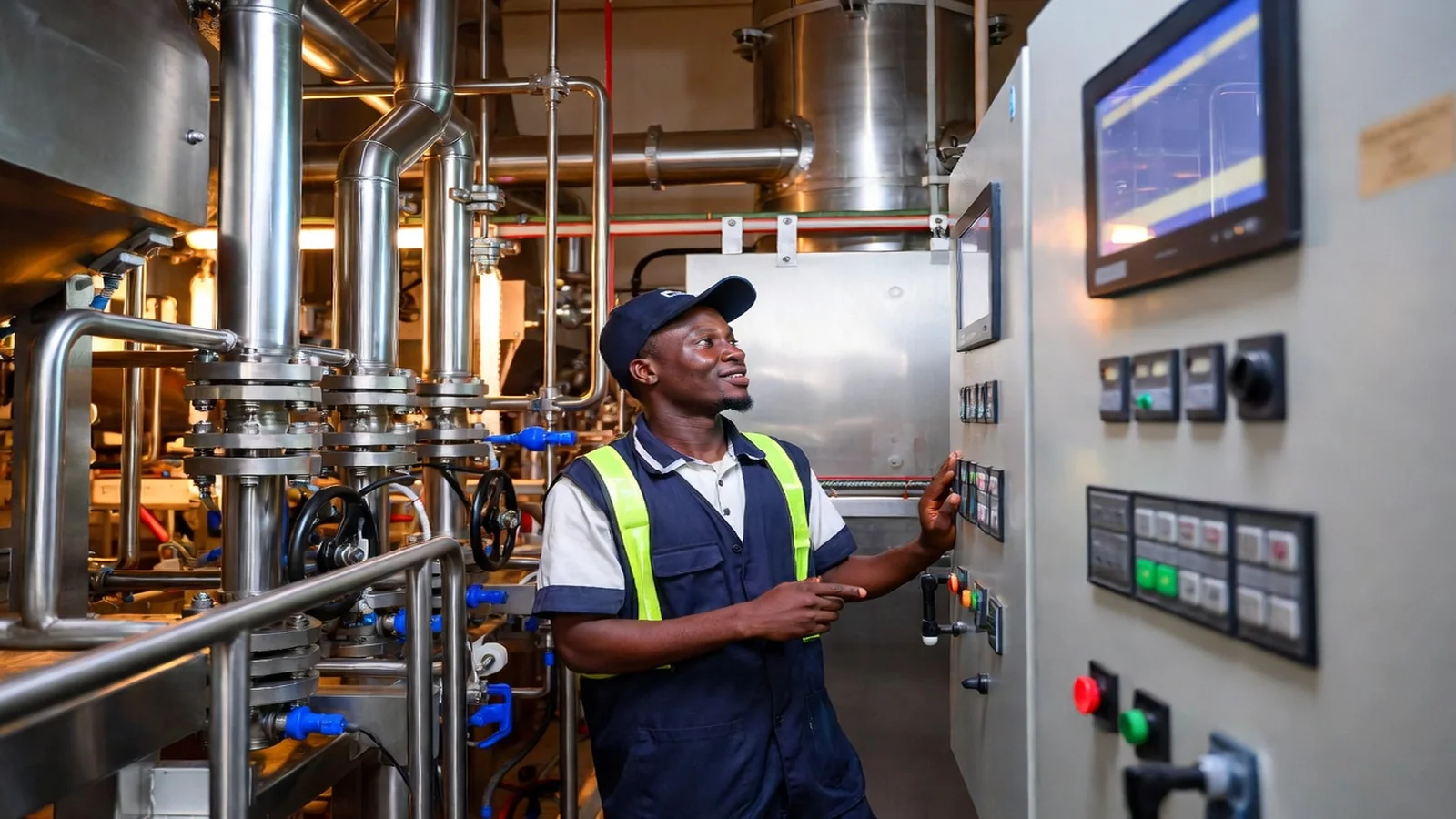
- Industrial-grade PLCs and SCADA systems configured to client-specific control logic
- Sensor and actuation components selected for the thermal, humidity, and particulate conditions of each facility
- Safety interlocking and emergency-stop architecture integrated into every automated sequence
- Documentation packages: control logic diagrams, maintenance schedules, and operator reference manuals provided at handover
- Commissioning validated against the client’s own production KPIs, not generic benchmarks
Outcomes for the Client Operation
Facilities that have undergone structured process automation through RoboFactory Africa’s methodology report consistent throughput, reduced dependency on manual intervention, and a measurable reduction in production variability. The outcome is a plant that performs predictably at scale — one whose automated sequences can be monitored, adjusted, and expanded as operational requirements evolve.
Ongoing support is available through structured maintenance agreements, remote monitoring where infrastructure permits, and on-site specialist response for facilities across Ghana and Togo.
Related Solutions
Process automation integrates directly with related services across the RoboFactory Africa portfolio:
- Robotics Integration — for operations requiring robotic pick-and-place, welding, or assembly within the automated sequence
- Conveyor and Material Handling Systems — the physical substrate through which automated sequences move product
- Control Systems Engineering — PLC and SCADA architecture underpinning every automated process
- Maintenance and Support — structured aftercare to sustain system performance across the operational lifecycle
Related Services
- Industrial Automation & Systems Integration — design to commissioning, one integrator
- Automation System Design & Engineering — the architecture phase
- Robotic Installation & Integration — robotic cells on the line
- Controls & Instrumentation — panels, PLC/SCADA, sensors
- Custom Automation Solutions — bespoke engineering for non-standard processes
- Automation Retrofits & Upgrades — modernise a legacy line incrementally
- Maintenance & Support — lifecycle aftercare for the running system
Engineered to Standard
- We engineer to recognised practice — IEC 61131-3 (PLC programming), ISO 12100 (machinery safety risk assessment), IEC 61439 (control-panel assemblies), IEC 61508 / IEC 61511 (functional safety / SIL where required) and ISA-95 (MES integration) — and within Ghana’s Factories, Offices and Shops Act 1970 (Act 328) / DFI safety regime
- We describe these as the framework we work to, and claim a specific certification or OEM-partner badge only where it is actually held
- A process-automation project is scoped and quoted per project — line, scope, controls and instrumentation, single-stage vs full-facility all drive it, so there is no flat published rate; we quote against your actual requirement, never an invented figure
- Established 2018 — a real industrial process-automation integrator serving manufacturers and process plants across Accra, Tema and Ghana’s industrial zones, and into Togo (Lomé) and the wider West-African market, not a consumer-robotics or software-RPA vendor