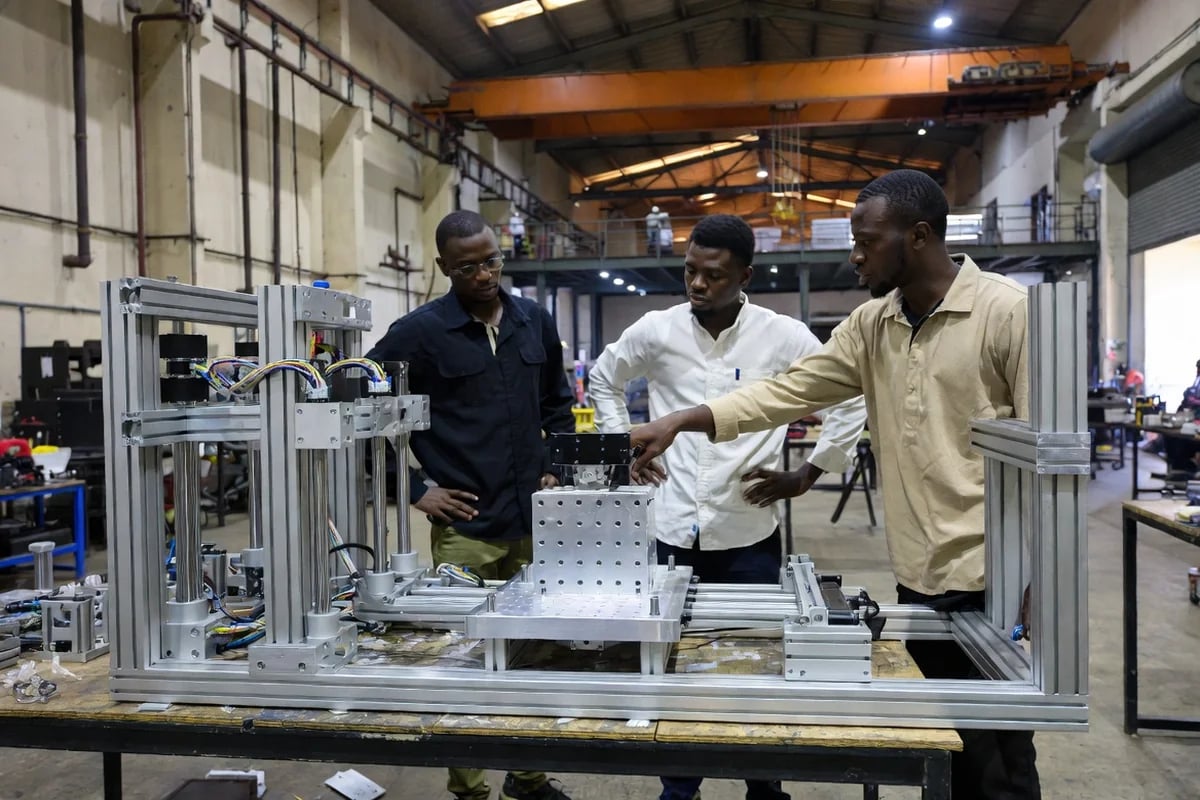
Custom Automation Solutions
Bespoke automation solutions engineered from the ground up for non-standard processes, unique production environments and specialised industrial requirements where off-the-shelf systems are not appropriate.
Custom automation begins with the actual facility, not a catalogue — and to be clear before anything else: RoboFactory Africa builds physical, engineered automation systems (PLC/SCADA, robotic cells, instrumentation) for non-standard processes — not consumer robotics, robotics education, or RPA software. We design from the ground up for manufacturers and process plants whose process is the constraint, across Ghana and Togo, since 2018. Request a consultation — or scope an automation project: +233 20 531 3333 (Togo / Francophone: +228 96 86 86 75).
What Are Custom Automation Solutions?
Custom automation solutions are bespoke engineering programmes designed from the ground up — built around the specific constraints, throughput sequences, and operational logic of a process that no standard off-the-shelf system was designed to serve. Where catalogue automation addresses generalised production models, custom automation begins with the actual facility: its physical geometry, its materials handling peculiarities, its workforce interface requirements, and the precision tolerances its process demands.
Clients who specify custom automation typically operate non-standard production lines, unique processing environments, or specialised industrial operations in which generic PLC programmes, pre-configured conveyance systems, or standard robotic cells would introduce more friction than efficiency. Pharmaceutical packaging lines with multi-SKU compliance requirements, food-processing operations with non-uniform raw material profiles, and industrial manufacturing cells with complex sequencing logic are precisely the environments for which custom engineering exists.
When to Specify Custom Automation
Custom automation becomes the correct specification when the process does not fit the product — when the operational flow, the output specification, or the physical configuration of the facility renders standard automation inadequate or counterproductive. Manufacturing operations across Ghana and Togo increasingly encounter this threshold as they scale: what began as a manageable manual process develops complexity that demands engineered control.
Sectors that consistently arrive at this specification include food and beverage processing, pharmaceutical and nutraceutical manufacturing, packaging and labelling lines with variable formats, light and heavy industrial assembly, and agro-processing operations managing variable input quality. Projects in these sectors share a defining characteristic: the process is the constraint, and the automation must conform to it — not the reverse.
Methodology — The RoboFactory Africa Specialist Approach
-
Process Discovery and Requirements Definition — Specialists conduct structured workshops with operational and engineering stakeholders to document the current-state process in full: material flows, cycle times, operator touchpoints, quality hold points, and known failure modes. Nothing is assumed.
-
Engineering Concept and System Architecture — From the discovery baseline, a bespoke automation architecture is developed — selecting control platforms, sensor technologies, actuator types, and integration protocols that match the process requirements. Concept documentation is reviewed and approved before any build commences.
-
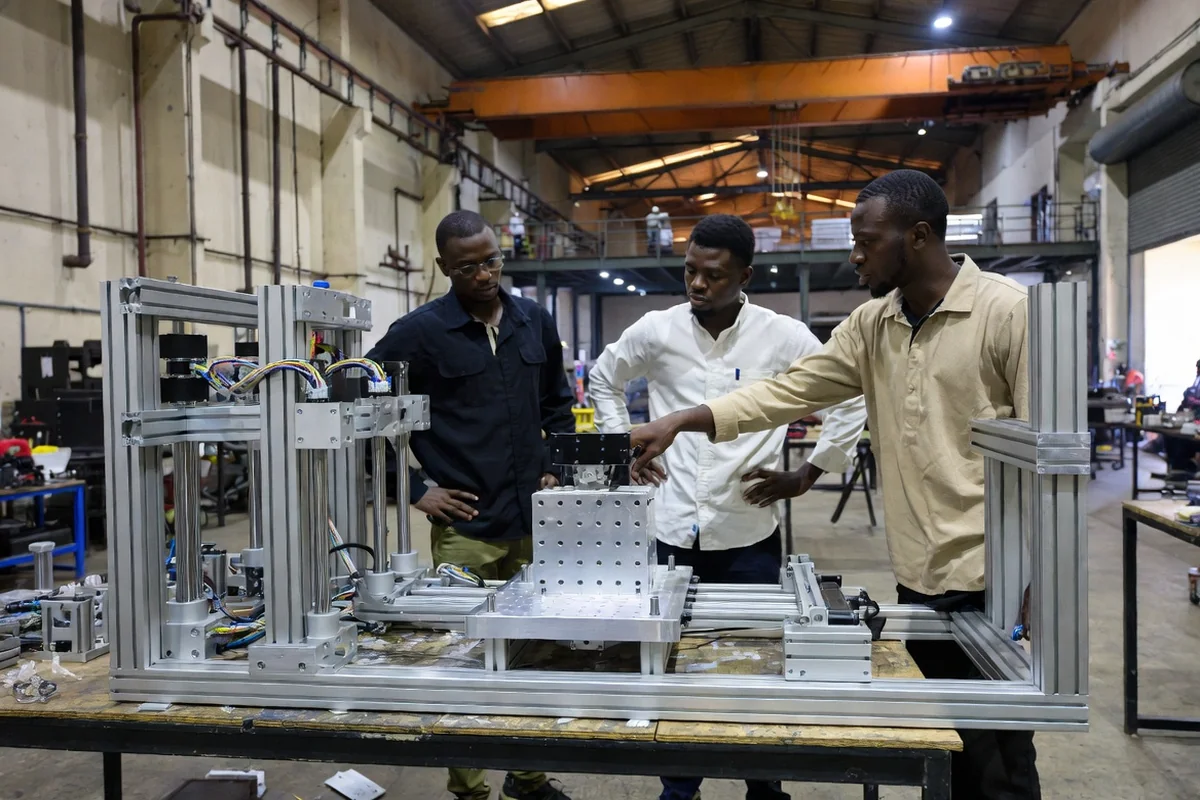
Custom Build and Bench Testing — System components are assembled and subjected to rigorous bench-level testing against the agreed process specification. Logic sequences are validated under simulated load conditions before the system leaves the integration environment.
-
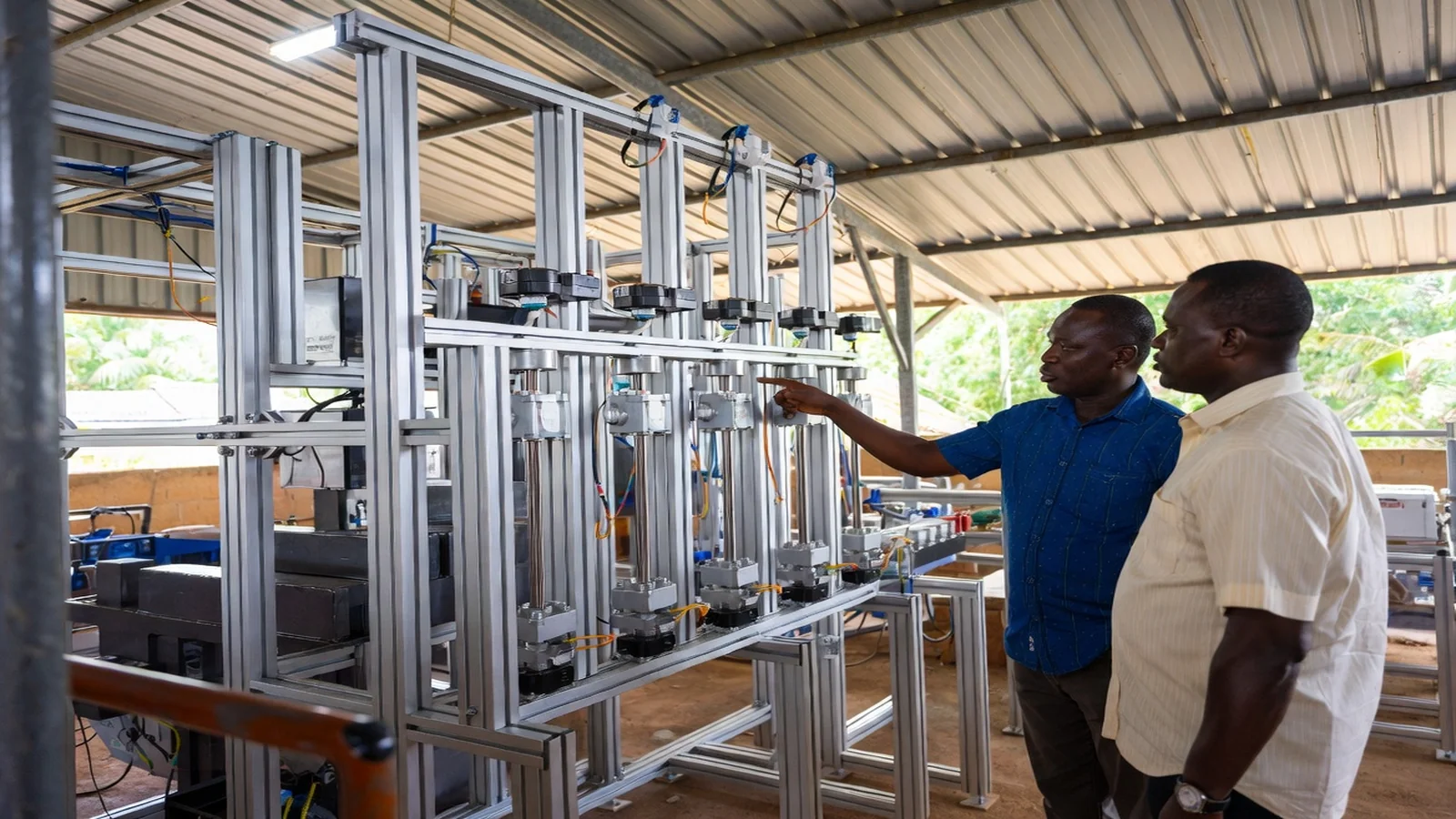
Site Integration and Commissioning — The validated system is integrated into the live facility across agreed phases, minimising production disruption. Commissioning proceeds step-by-step, with each phase signed off before the next is activated.
-
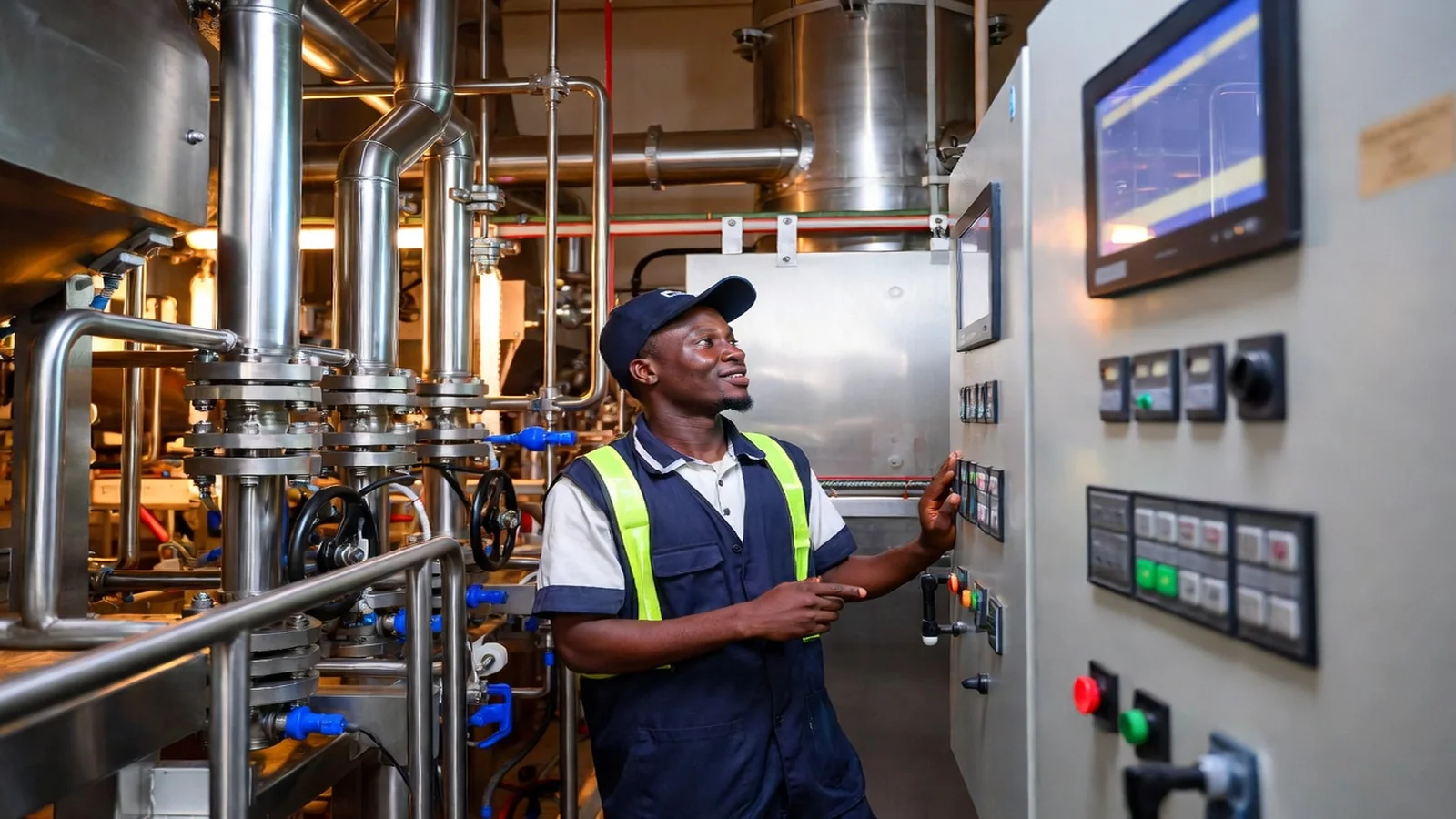
Operator Training and Handover — On-site training is delivered to operational and maintenance personnel, calibrated to the specific system deployed. Documentation, escalation protocols, and support arrangements are formalised at handover.
Engineering Standards & Process Discipline
- Control logic and PLC programming developed to the specific process sequence — no repurposed generic templates
- Sensor selection, actuator sizing, and panel design specified to the environmental and duty conditions of the facility
- Integration architecture designed for compatibility with existing upstream and downstream equipment
- Electrical and control installations conducted in accordance with applicable industrial safety practices
- System documentation — including P&IDs, wiring schedules, and operator manuals — delivered as part of every project
Outcomes
A well-executed custom automation programme delivers a system that behaves as though it was always part of the facility — because it was designed to be. Throughput becomes predictable. Quality hold points become systematic rather than operator-dependent. The operation gains a level of process control that positions it for further scale.
Post-commissioning support arrangements are structured to match the criticality of the operation, with defined response frameworks and scheduled preventive maintenance programmes available across Ghana and Togo.
Related Solutions
- PLC Programming and Control Systems
- Industrial Process Integration
- Automation Consulting and Feasibility
- Operator Training and Commissioning Support
Related Services
- Industrial Automation & Systems Integration — design to commissioning, one integrator
- Automation System Design & Engineering — the bespoke architecture phase
- Robotic Installation & Integration — robotic cells within a custom solution
- Controls & Instrumentation — panels, PLC/SCADA, sensors
- Process Automation — line automation engineered to the target
- Automation Consultation & Assessment — strategic scoping and feasibility
- Training & Enablement — operator competency on the deployed system
Engineered to Standard
- We engineer to recognised practice — IEC 61131-3 (PLC programming), ISO 12100 (machinery safety risk assessment), IEC 61439 (control-panel assemblies), ISA-95 (supervisory/MES integration) and IEC 61508 / IEC 61511 (functional safety / SIL where required) — and within Ghana’s Factories, Offices and Shops Act 1970 (Act 328) / DFI safety regime
- We describe these as the framework we work to, and claim a specific certification or OEM-partner badge only where it is actually held
- A custom-automation programme is scoped and quoted per project — the process, the build complexity, the controls and the integration all drive it, so there is no flat published rate; we quote against your actual requirement, never an invented figure
- Established 2018 — a real factory-automation integrator serving manufacturers and process plants across Accra, Tema and Ghana’s industrial zones, and into Togo (Lomé) and the wider West-African market, not a consumer-robotics or software-RPA vendor