The problem
Institutional buyers need a documented, HSE-disciplined source for controls & instrumentation.
Our approach
Controls & Instrumentation
Controls & Instrumentation delivered to institutional standard — structured procurement, chain-of-custody discipline, documented handover.
The Challenge
Manufacturing and processing operations across Ghana and Togo routinely carry a silent liability: control systems and instrumentation that were never properly matched to the process they govern. Sensors specified for a different duty cycle, PLCs integrated without structured loop documentation, field instruments installed without chain-of-custody records — each gap is a potential point of unplanned downtime, quality deviation, or regulatory exposure. In a competitive industrial landscape where uptime is a direct revenue variable, that liability accumulates.
The challenge is compounded at the integration layer. Controls and instrumentation rarely fail as isolated components; they fail at boundaries — where a field transmitter hands off to a SCADA layer, where a control loop was commissioned in isolation rather than as part of a verified system. Facilities that have grown through successive capital additions are particularly exposed: legacy instrumentation co-existing with newer automation hardware, without a disciplined engineering layer to hold the architecture coherent.
Across food processing, pharmaceutical manufacturing, chemical blending, and industrial packaging operations, the pattern repeats. Process engineers inherit systems with incomplete as-built documentation, inconsistent calibration schedules, and no structured escalation path when instrumentation drifts. The result is reactive maintenance replacing what should be a governed, specification-grade controls environment.
The RoboFactory Africa Solution
RoboFactory Africa approaches Controls and Instrumentation as an engineering discipline, not a procurement transaction. Engagements begin with a structured process audit — mapping existing control loops, instrumentation duty conditions, signal architecture, and documentation gaps against the operational requirements the facility actually demands. What emerges is a controls brief: a precise, facility-specific specification that governs every selection and integration decision that follows.
Instrumentation is selected for process compatibility first — fluid characteristics, temperature and pressure envelopes, hazardous area classifications where applicable, and long-term maintainability within the Ghanaian and Togolese supply environment. PLC and SCADA architecture is engineered to match the control philosophy, with loop documentation produced to a standard that survives personnel transitions. Every integration point is verified, not assumed.
Commissioning is conducted as a witnessed, documented process. Loop checks, signal verification, and operator familiarisation are structured phases — not afterthoughts. Handover packages include full as-built documentation, calibration records, and a defined support pathway, so the facility’s engineering team inherits a governed system, not a black box.
System and Specification Scope
- Field instrumentation selection: flow, pressure, level, temperature, and analytical instruments specified to process duty conditions
- PLC and distributed control system (DCS) architecture: engineered to control philosophy, with structured loop documentation
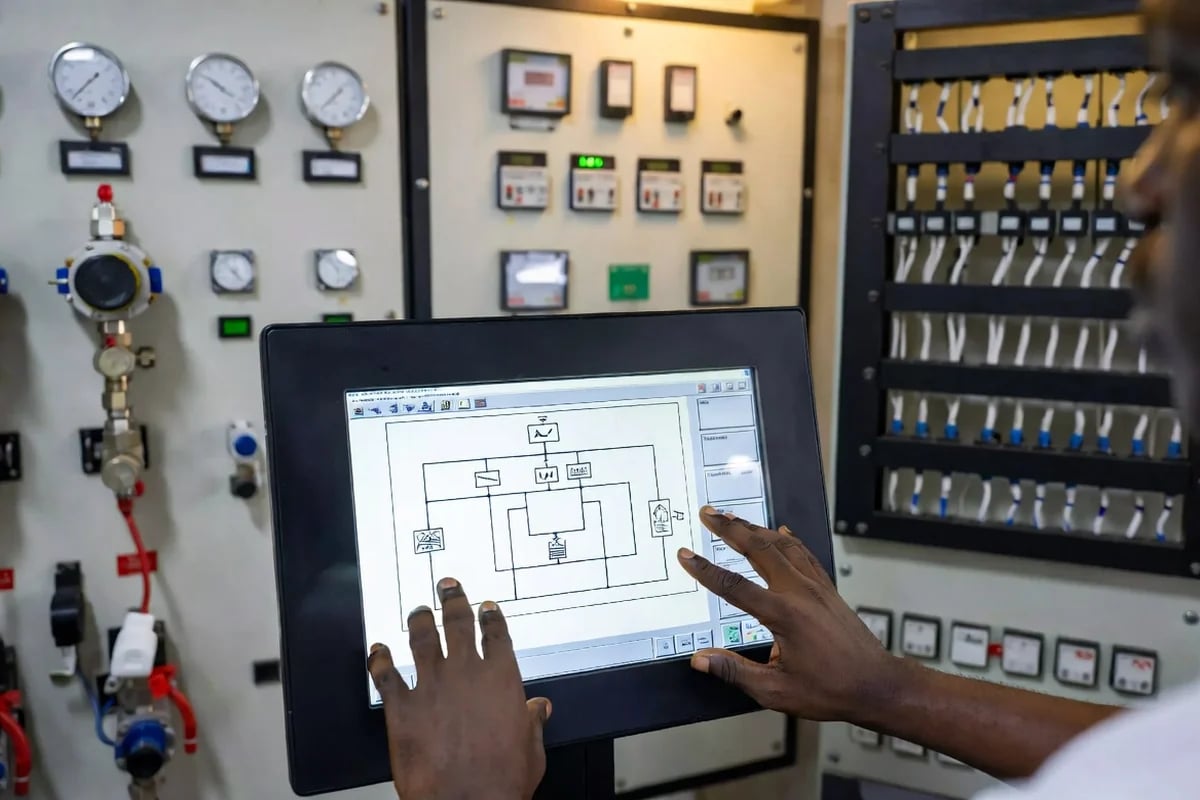
- SCADA and HMI configuration: operator interface designed for process clarity and alarm management discipline
- Signal architecture and marshalling: structured cabling, termination, and I/O documentation for maintainability
- Hazardous area compliance review: instrumentation zoning assessed against facility classification requirements
- Calibration and commissioning protocols: witnessed loop checks, signal verification, and documented handover packages
Typical Project Profile
A representative engagement covers a mid-scale processing facility in Ghana or Togo undertaking a controls upgrade or greenfield automation phase — typically spanning process audit, instrumentation specification, PLC/SCADA integration, and commissioned handover over a defined project programme. Sectors served include food and beverage processing, pharmaceutical and nutraceutical manufacturing, chemical and industrial blending, and packaging lines requiring coordinated motion and process control. Project scope is phased where operational continuity demands it, with each phase delivered to the same documentation and commissioning standard as the whole.
Outcomes
- Control loops governed by a coherent, documented architecture — not accumulated workarounds
- Instrumentation matched to actual process duty conditions, reducing calibration drift and unplanned intervention
- As-built documentation and calibration records that survive personnel transitions and support future capital additions
- Operators and engineering staff with structured familiarisation, reducing dependence on original integration knowledge
- A defined support and maintenance pathway, so the system remains a managed asset rather than a maintenance liability